Deprecated: Using null as an array offset is deprecated, use an empty string instead in /home/swimtechdev/public_html/kwe.socialplustesting.co.uk/wp-content/plugins/wordpress-seo/src/memoizers/meta-tags-context-memoizer.php on line 135
Deprecated: Using null as an array offset is deprecated, use an empty string instead in /home/swimtechdev/public_html/kwe.socialplustesting.co.uk/wp-content/plugins/wordpress-seo/src/memoizers/meta-tags-context-memoizer.php on line 157
ISO9001 Certification and what it means for KWE and KWE customers.
KWE are proud to have been awarded ISO9001:2015 certification. But what does it mean for us and more importantly, you?
ISO9001:2015 is the international Standard for Quality Management and has been designed to ensure that our customers have assurance that no matter what job we’re working on for you, we will guarantee that we consistently deliver a quality product and service to you.
This International Standard specifies requirements for a quality management system when an organization:
-
- needs to demonstrate its ability to consistently provide products and services that meet customer and applicable statutory and regulatory requirements, and
- aims to enhance customer satisfaction through the effective application of the system, including processes for improvement of the system and the assurance of conformity to customer and applicable statutory and regulatory requirements.
This certification is based on a plan, do, check and then act methodology which provides a process orientated approach to documenting and reviewing the structure, responsibilities, and procedures within our company.
In order to achieve this certification, KWE have gone through a series of rigorous checks to confirm that we are achieving against QMS’s set of Quality Principles. These include:
-
-
- Customer Focus – while our customers have always been at the forefront of our business, we are completely committed to providing the highest quality in customer service, no matter how big or small the job we complete for you is.
- Leadership – we are committed to our employees, providing excellence in leadership is beneficial to us as a business but improves our employee morale.
- Engagement of people – feeding into the previous quality principle, the directors at KWE achieve this quality by providing support to our employees, aiding them in completing jobs to the standard we expect.
- Process Approach – everything we do at KWE is a set process, this aids us in ensuring consistent performance in our work. By working with a process approach, we can ensure that planned goals are achieved efficiently and effectively.
- Continual Improvement – Whilst we have achieved ISO9001:2015 already, this does not mean that this is a done deal. KWE are committed to refining our processes and evaluating our quality principles to keep on achieving better quality outcomes for our business and more importantly our customers.
- Evidence-based decision making – We make our decisions and take actions, based on evidence combined with over 30 years of experience in our field. We use key performance indicators to evaluate and improve what we do.
- Relationship management – The relationships we have with our customers, suppliers, employees, contractors and other people we work with is important. Breaks in business relationships can be detrimental to everyone involved and meeting this quality is proof that we hold relationships with high regard.
-
As mentioned, achieving the ISO9001:2015 Certification is an achievement for us and for our company. We’ll be audited regularly to confirm that we continue to evaluate and improve our Quality Management Standards. These audits will help us to ensure that we’re maintaining a quality relationship across the board; from customer to supplier and beyond.
Call us today on 01670 856 049 or email us on info@kwe.co.uk to get your free quote from your local ISO9001:2015 certified electrical contractor.
The post ISO9001 Certification and what it means for KWE and KWE customers. appeared first on KWE.
]]>
Electrical Safety at Christmas
It’s the most wonderful time of the year!
Christmas is finally here and being able to spend it with our families this year makes it even better.
As much as we all deserve a relaxing Christmas break with our family, we must be aware of electrical safety hazards over the festive period.
We’ve put together a list of tips to keep you safe over the Christmas period:
- Make sure your lights are safe, checking for damage or loose wires.
- If you need to replace light bulbs, make sure they are the same type and rating as the original bulb.
- Any outdoor lights should be connected via a 30Ma RCD protected socket, and if possible, keep all plugs and transformers indoors.
- Lights can heat up due to overuse, so when you go to bed or leaving the house switch them all off to allow the lights to cool down.
- Try not to overload sockets and extension leads as they can become a tripping hazard (especially after a Baileys or two)!
- Try not to charge your portable appliances, such as your laptop or phone, overnight as overcharging can cause some adapters to become a fire risk.
- And if you are doing your hair for your big night out, remember to turn your straighteners and curlers off!
Here at KWE, we really would like to emphasise the importance of electrical safety, not just at Christmas but all year round.
If you require any electrical work on your property or business in the new year give us a call on 01670 856049.
The post Electrical Safety at Christmas appeared first on KWE.
]]>
The PRS legislation – what you need to know
The PRS legislation sets safety standards for those in the private rented sector.
The Electrical Safety Standards in the Private Rented Sector were put into place in June 2020.
This legislation made it mandatory for private landlords in England to have electrical safety checks carried out at least every five years.
Another requirement in the legislation is that these checks must be carried out by a qualified and competent person.
If you are a landlord and your tenants refuse access or COVID restrictions prevent inspection, then you have not breached legislation.
Evidence of communication between tenants and electrical contractors should be recorded.
It is also beneficial to keep servicing records and safety reports to show that the installation has been kept in good condition.
The guidance requires landlords to test electrical wiring, sockets, consumer units and other electrical parts at least every five years.
During inspection, the competent person will check if…
- Any electrical installations are overloaded
- There are any potential shock risks or fire hazards
- There is any defective electrical work
- There is a lack of earthing or bonding
Although regular PAT testing is recommended for landlords, this is not covered under the Electrical Safety Standards regulation.
National electrical safety standards should be met whilst a tenant is living at the property.
Tenants must be given a report that shows the condition of the property’s electrical installations – the local council can request this document too.
The PRS legislation was put into place to reduce death and injuries due to electrical faults.
If you are a tenant paying rent, then you are covered by these requirements.
If you are a landlord and struggling to find a qualified electrician, contact us at KWE today on 01670 856049 or email us at info@kwe.uk.com.
The post The PRS legislation – what you need to know appeared first on KWE.
]]>
The importance of Emergency Lighting in public spaces
Emergency lighting is an essential component of any commercial or industrial environment.
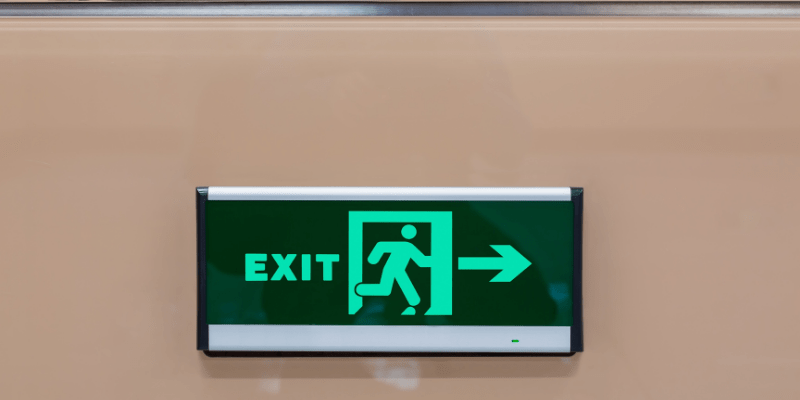
You may recognise emergency lighting signs from your trips to your local cinema or shopping centre.
Electrical safety forms a very important part of building compliance, to ensure safety for the public.
Emergency lighting provides lighting during unforeseen situations that cause the mains power supply to be cut.
Sudden darkness in case of emergencies, such as a fire, can lead to possible physical and mental danger.
Therefore, having emergency lighting as a preventative measure is a necessity in commercial buildings.
The lighting can provide safe evacuation during worst-case scenarios.
When there is a mains power failure, the rechargeable back-up batteries power the emergency lights in the building.
Emergency lighting needs to be tested regularly to ensure the lighting will work efficiently in case of an emergency.
A qualified electrician must ensure the lighting tubes and back-up battery is working properly.
Testing and inspection of emergency lighting should be documented onsite to keep a record of testing dates and outcomes.
Emergency lighting can be tested both monthly and annually.
A monthly test involves switching the mains power supply off, and a check to see if all emergency lights are visibly working.
Alternatively, an annual test involves leaving the mains power supply off for three hours to see if the emergency lights last the duration.
If they do not, back-up batteries will likely have to be replaced.
Carrying out testing and inspection out of hours ensures safety in case of emergencies when operating for the public.
There are a number of benefits to regular testing and inspection of your emergency lighting.
You will be reassured with peace of mind that the workplace is safe for yourself, your staff, and the public.
Emergency lighting also shows to other professionals that you and your company is compliant to electrical safety regulations and standards.
Regular testing can prolong the life of your equipment saving you revenue and liability long-term.
Here at KWE, we have a team of qualified electricians with over 30 years of experience who can fit and test your emergency lighting.
If this is something that you are interested in, call us on 01670 856049 or email us on info@kwe.uk.com.
The post The importance of Emergency Lighting in Public Spaces appeared first on KWE.
]]>
Electrical Safety in the Workplace
Electrical Safety in the Workplace
It is essential for businesses to ensure that their employees are working in a safe environment.
Every year, there are around 1000 accidents at work involving electricity that are reported to the Health and Safety Executive (HSE).
And around 30 deaths are caused due to electrical accidents.
The Electricity at Work Regulations (1989) require employers to make sure that all electrical equipment is safe.
To do this, employers must make sure that the equipment is checked, installed correctly and regularly inspected by a professional.
Electrical risk assessments should be conducted in the workplace; identifying any electrical hazards, the level of risk and the precautions that have been taken to control the risk.
It is a requirement that any incidents or injuries that are caused by electrical equipment are reported to the Health and Safety Executive (HSE) by an employer.
The main injuries that are caused by electrical hazards are: –
- Electrocution
- Electrical burns
- Electric shock
- Secondary injuries caused by an electrical shock
To avoid electrical injuries, employers should be aware of the most common electrical hazards in the workplace.
Frayed or loose cables can expose live wires which can lead to electrical fires or electric shock. Damaged cables should be repaired or replaced by a qualified electrician.
Electrical equipment that is used in close proximity to water increases the risk of electrocution, this should be avoided and if equipment does get wet, an electrician should complete an inspection.
Incorrect fuse replacements can cause appliances to overheat, if you are unsure yourself contact us and we can have a qualified electrician advise you.
Plugs and appliances that smell of smoke are a sign of an electrical hazard; an electrician would come to the workplace and turn off the electrical supply to any equipment that is a danger or has a fault.
The HSE produce multiple guides on regulations surrounding electrical safety and these can be referred to by employers.
It is recommended the risk assessments are reviewed regularly by employers, evaluating any new risks or risk levels that have changed.
Regular testing and inspections should be conducted by qualified electricians, including PAT testing inspections and reports.
Here at KWE, we can complete regular inspections with the help of our fully qualified electricians to ensure that your workplace is a safe environment for you and your employees.
If this is something that you would like to discuss further or if you have any questions regarding our services give us a call on 01670 856049 or email us on info@kwe.uk.com.
The post Electrical Safety in the Workplace appeared first on KWE.
]]>
The Importance of PAT Testing when it comes to your Business
If you are a business owner or landlord, there are certain regulations which require you to make sure your electrical appliances are safe to use.
This could mean regular inspection and testing of your electrical appliances.
PAT testing is an example of this; Portable Appliance Testing is the term used to describe the examination of portable electrical appliances to ensure that they are safe to use.
At KWE, our electricians are trained to test your appliances, these appliances can range from kettles to sewing machines. Essentially any appliance which plugs into a socket to be in use at your business workplace.
The regulation that requires you to keep your electrical appliances in a safe condition is the Electricity at Work Regulations 1989.
The frequency of inspections and testing depends on the type of appliance and the environment that it is in, power tools used in construction should be inspected more than lamps in an office.
Appliances that have been tested will be labelled with the date of inspection, making the monitoring of the equipment inspections an easier process.
Intervals between PAT testing can be between one and five years, user checks are encouraged to make sure they look visibly safe regularly.
As a business owner or landlord, you have the responsibility of removing or repairing damaged equipment after the inspection.
Regular PAT testing can save revenue in the long run, through regular maintenance and repairs rather than having to replace the appliances.
Faulty appliances can lead to dangerous work and home environments.
PAT testing should be included as part of a risk assessment of the environment, to ensure safety for employees or tenants.
If you are looking for an electrician for PAT testing, then look no further!
Here at KWE, we have a number of qualified electricians who can test your appliances ensuring their safety for employee-use.
As always, we dictate our pricing on the individual project, so get in touch today for a quote on 01670 856 049 or email us on info@kwe.uk.com.
The post Portable Appliance Testing (PAT) appeared first on KWE.
]]>
EICR and what it means for Landlords and Homeowners
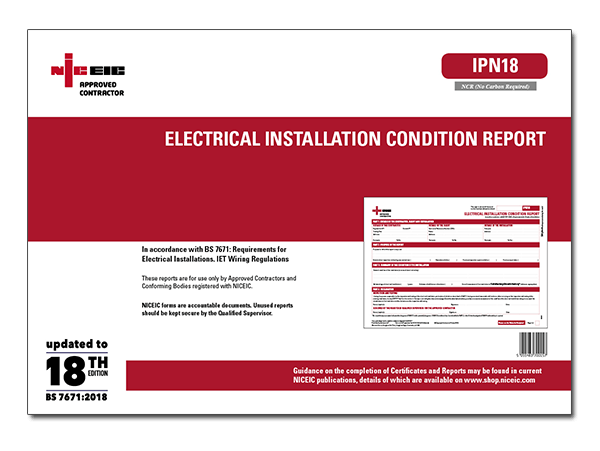
An electrical installation condition report (EICR) is where the condition of your cables, switches, sockets, and other accessories are inspected.
The aims of an EICR report include:
- To test whether the electrical installation is safe and in good condition, the results are recorded, and if any work is required this is recorded too.
- Find any damage or wear and tear, that may affect the safety of the installation.
- Find any parts of the electrical installation that do not meet the IET Wiring Regulations.
- Risk-assess the chance of electric shocks or high temperatures.
- Provide a record of the installation at the time of inspection, for future inspection and testing.
EICR can be conducted in two ways, a visual condition report or a periodic inspection report.
Visual condition reports are only recommended when installations in the home have been tested recently.
Periodic inspection reports test the installation and find hidden damage – these are the usual recommendations.
Having the electrical installations in your home inspected regularly is important to ensure peace of mind.
This is especially important for landlords, as new regulations require landlords to have electrical installations in their properties inspected at least every five years.
The new EICR regulations have been put in place to ensure the safety of those who are renting properties.
The report must be shared with prospective or current tenants, local authorities, and inspectors when relevant.
When requested, the report must be provided within 28 days.
These regulations also apply to Houses in Multiple Occupation, where a property is rented out to multiple tenants with shared facilities, for example, a kitchen and bathroom.
EICR regulations only apply to fixed electrical installations, however, it is recommended that landlords also carry out regular PAT testing on their electrical appliances.
If a property is newly built or has been completely rewired, it should have an Electrical Installation Certificate (EIC).
No further inspections would be required until five years after the issue of the EIC.
If you are buying a new home, an EICR is often recommended as part of the buying process.
Having an EICR conducted provides important information of the condition of the electrical installations in the home.
Here at KWE, we can conduct an EICR on your own home, on a new home if you are looking to buy or on multiple properties if you are a landlord.
And, if you are a landlord, we can also PAT test your electrical appliances, ensuring a high level of safety for your tenants.
We have over thirty years of experience and we are a NICEIC accredited electrical contractors.
This confirms to our prospective customers that we are a trustworthy business with an excellent reputation.
And we are more than happy to help!
If you require an EICR to be conducted on your property, don’t hesitate to get in touch to receive your free quote.
Call us today on 01670 856 049 or email us on info@kwe.co.uk.
The post EICR and what it means for Landlords and Homeowners appeared first on KWE.
]]>
KWE – Keith Wilkinson Electrical Contractors Ltd. We are an accredited Electrical Contractor based in Northumberland. With over thirty years of experience in the industry, we have an excellent reputation of good workmanship and client loyalty. Our mission is to provide our clients the best quality products and service.
We regularly review materials and supply chains, ensuring that our materials are environmentally friendly, but still long lasting and cost effective.
As well as Residential work we have also expanded into both Commercial and Industrial sectors too. As our company has grown, so have the projects we have worked on. We have been contracted to companies such as Fergusons Transport, Northumberland City Council and The Environment Partnership.
Our services range from full and partial re-wires to light fittings and upgrades. We provide clear and concise pricing for every job we do.
No project is too big or small for KWE, and we believe in a tailored service, providing a service that fits the requirements of your individual needs. We provide telephone and data services, as well as new build installations too. But what sets KWE apart from other Electrical Contractors?
Here at KWE, we are NICEIC accredited meaning that we are regulated by the UK’s largest voluntary register of electrical businesses.
The NICEIC provide industry leading training and consulting services for building and construction sectors. They check compliance and conformity against strict standards and regulations.
Businesses, like us, that are on the NICEIC register are evaluated looking at their policies, procedures, and technical competency of their work..
The NICEIC have ensured electrical safety for over 65 years. By being regulated by the NICEIC, we can assure our loyal and new customers that our services are provided with the highest standard in terms of both, quality, and safety.
As well as being NICEIC approved Electrical Contractors, we are a CHAS member and work as part of the Government endorsed quality scheme TrustMark.
CHAS is a leading accreditation scheme in the UK, which allows clients to source trustworthy contracts with businesses like KWE. As a CHAS member, we are evaluated against environmental standards, equal opportunities, diversity accreditation and more. CHAS members are assessed against the Common Assessment Standard which helps both, clients, and contractors to improve supply chain efficiency and reduce risks.
Contractors are helped to achieve compliance and mitigate risks across 12 key areas of risk management.
TrustMark is a Government endorsed quality scheme covering work a consumer chooses to have carried out in or around their home. By choosing a TrustMark registered business, the customer knows they are working with a contractor who is thoroughly vetted to meet required standards. TrustMark ensures three cornerstones of quality: technical competence, good customer service and good trading practices.
The accreditations listed show that we are not just your standard electricians. We are Electrical Contractors who pride ourselves on our high-quality products and services, keeping our customers needs at the centre of everything we do. If you would like to enquire about any services that we provide or any projects that you may require our help with don’t hesitate to get in touch!
We can be contacted by calling us on 01670 856049 or 07940571444 or email us on info@kwe.uk.com.
The post KWE – Who are we? appeared first on KWE.
]]>